Showing posts with label article. Show all posts

Thursday, October 15, 2009

Ten Tips for Writing a Blog

These tips taken from Mr. McClung's post at this link. I found this very useful for a variety of reasons. Mr. McClung is doing this as a class project. I will use this for my own students who are blogging, but also personally and at school.

1. Make your opinion known
People like blogs, they like blogs because they are written by people and not corporations. People want to know what people think, crazy as it sounds they want to know what you think. Tell them exactly what you think using the least amount of words possible.

2. Link like crazy.
Support your post with links to other web pages that are contextual to your post.

3. Write Less
Give the maximum amount of information with the least amount of words. Time is finite and people are infinitely busy. Blast your knowledge into the reader at the speed of sound.

4. 250 is enough
A long post is easier to forget and harder to get into. A short post is the opposite.

5. Make Headlines snappy
Contain your whole argument in your headline. Check out National newspapers to see how they do it.

6. Include bullet point lists
We all love lists, it structures the info in an easily digestible format.

7. Make your posts easy to scan
Every few paragraphs insert a sub heading. Make sentences and headlines short and to the point.

8. Be consistent with your style
People like to know what to expect, once you have settled on a style for your audience stick to it.

9. Litter the post with Keywords.
Think about what keywords people would use to search for your post and include them in the body text and headers. make sure the keyword placement is natural and does not seem out of place.

10. Edit your post
Good writing is in the editing. Before you hit the submit button, re-read your post and cut out the stuff that you don’t need.


Mr. Wiemers
http://mrwiemersshop.com

Saturday, August 29, 2009

"Education Week"

Occasionally I will read something in "Education Week" that strikes a harmonic cord with me philosophically. This week (August 26, 2009) Daniel Wolff made some comments and included some quotes that quickened the spirit of education for me in his article "The President's Laugh Line." While addressing the Hispanic Chamber of Commerce the President suggested that we "rethink the school day to incorporate more time." Wolff goes on to quote or summarize comments by Franklin, Lincoln, Ford, and Kennedy to redirect the conversation from "longer school days" to "better use of schools." Wolff writes:
Ben Franklin, writing as Poor Richard, declared: 'A learned blockhead is a greater blockhead than an ignorant one.' His Autobiography basically argued that he had become a great American, scientist, and political thinker by spending less time in school, not more.

Abraham Lincoln read Franklin, and when he ran for office made sure to portray himself as a largely uneducated backwoodsman. Henry Ford believed too much schooling could ruin a mind. And John F. Kennedy, for all his presidential rhetoric about the importance of education, thought his time in prep schools and then Harvard mostly silly: The socializing was fun, the learning of little to no consequence."
Wolff then comments what would be lost if our students were forced to spend longer days in school: time with parents working two jobs, responsibility and money from after school jobs, time spent supervising siblings, relaxation, time to do homework. I could add many things more that would be lost with a longer school day. I would suggest reducing the things we try to cram into a school day before we make the school day longer. But, that was not the point of this article.

Wolff ends with suggesting a more flexible, alternative solution. A school building, he says, is a major community resource with computers, cafeterias, libraries and sport facilities. "Why not institute a program that transforms our public schools into community centers?" They could be a place for students to do their evening research and homework. I would ask, why are school libraries and school computer labs shut down after school? Why aren't night classes added to assist students who need more help. I say we should reduce the socialistic load placed on schools during the day, restore the vision of education and, instead of lengthening the school day, simply extend the hours the school is opened and equip with man power to teach and assist in the learning process. Men like Franklin, Ford, Lincoln and Kennedy realized that school does not have a monopoly on education. If schools continue to think they have a monopoly on education and that they control the educational process they will continue to deteriorate as an educational institution.

Mr. Wiemers
http://mrwiemersshop.com

Saturday, March 14, 2009

The Convenience of Confusion

(The following is an excerpt from "Hope for America's Last Generation" written by Galyn Wiemers in 2007)
I AM A teacher, and I coach the boys’ track team at our school. Track practice takes place every weekday after school throughout the season. It’s always been that way, and probably always will be. One week I learned that a school dance was scheduled for Friday afternoon right after class ended. Because the dance was going to go well into the night, I told the boys we’d have track practice after school like usual, and they could head over to the dance when they were finished. I told them I was well aware of the dance, but practice was still on. I thought I’d made everything clear as the boys headed to their locker room after Thursday’s track practice.

On Friday, about five minutes before the last bell rang, I noticed a DJ setting up his sound equipment for the dance in the school gym. Since our track team practices right outside the gym, I knew the boys were going to be frustrated when they heard the music and saw fellow classmates dancing. I wondered if some boys might still be tempted to skip practice, so, for good measure, I decided to make one final announcement over the intercom as a reminder. The announcement was, “There will be track practice as usual immediately after school today for the entire boys track team.”

Right as the announcement ended, eight boys from the track team walked into my classroom dizzy with confusion. One boy conjured up his best look of bewilderment and asked, “Coach, do we have practice tonight? We were wondering because nobody really knows.” When I again confirmed that we did, another boy quickly asked, “What happens if we don’t come?” My reply was simple: “You’ll be punished.”

Confusion was not limited to this group of boys. Many members of the track team lingered in the hallway debating about whether or not there was track practice. One boy approached a team manager to inquire about it. The manager supposedly told him, “I think there’s practice…but it might be optional.” That was all that the boy needed. Now armed with words straight from the mouth of the team manager, he could claim ignorance to later justify the reason he followed his desires and went to the dance. As I left my classroom to head to the track, another boy stopped me to ask about practice. I looked right at him and said, “Yes, we have practice.” He went to the dance. The track boys who chose to go to the dance could actually see their teammates running warm up laps on the track outside as they walked into the gym. Yet these boys remained “confused” as to whether or not there was track practice.

When all seventy track boys showed up on Monday, I asked why twelve of them had missed Friday’s practice. The excuses varied but all came back to the same claim: they were in a state of ignorance due to so much confusion. Some insisted that I hadn’t made it clear. One blamed the manager for saying practice was optional. Others swore they forgot. And all the boys who went to the dance confirmed each other’s confusion by contending that there was just no way of knowing whether or not we had practice. Their strategy involved insisting on confusion. They figured if enough people said they were confused, I would have to accept it as a legitimate excuse. But I didn’t. The confused boys lost the privilege of
running in our first track meet.

As I stood there on Monday surrounded by the track team it became clear to me that, in life, people choose to be confused. I couldn’t have done anything more to get them to track practice short of picking them up and carrying them from the school to the track. (Even then some of the boys probably would have slipped away to the dance while I wasn’t looking.) After all my effort to communicate obvious truth, still almost 20% of the boys I spoke with chose to remain confused.

Today the people of the United States of America have become just like those junior high boys. It’s a growing cultural pandemic to be confused about what’s right, true, and moral. It’s hip to claim ignorance and say, “I don’t think we can ever really know for sure about things we can’t see.” In fact, claiming ignorance is the quickest way to avoid any kind of personal responsibility to know and understand the certain areas of life. But just because there so are many conflicting beliefs in this world doesn’t mean we can claim to be “confused” about what’s right without facing serious consequences. And just because certain areas of thought may baffle us doesn’t give us a free pass to skip over them. Just because some issues are hotly debated doesn’t mean we aren’t accountable for examining the evidence ourselves. We can’t hide behind our claims of confusion any longer. We must stop making excuses and admit that things can be known for certain. It’s time for us to quit being lazy and get busy gaining the understanding we lack. Like the track boys, the excuse of, “I just wasn’t sure which way was right,” is not going to cut it in the end.

Mr. Wiemers
http://mrwiemersshop.com/

Thursday, March 12, 2009

Program for International Student Assessment (PISA) "Called Inappropriate"

The March 4, 2009 Education Week has an article entitled PISA Called Inappropriate for U.S. Benchmarking. PISA (Program for International Student Assessment) is described as "flawed" and may not be "appropriate for judging American schools."

The website for Program for Internation Students Assessment provides the following overview of what PISA actually is:

The Program for International Student Assessment (PISA) is a system of international assessments that focus on 15-year-olds' capabilities in reading literacy, mathematics literacy, and science literacy. PISA also includes measures of general or cross-curricular competencies such as learning strategies. PISA emphasizes functional skills that students have acquired as they near the end of mandatory schooling. PISA is organized by the Organization for Economic Cooperation and Development (OECD), an intergovernmental organization of industrialized countries. Begun in 2000, PISA is administered every 3 years. Each administration includes assessments of all three subjects, but assesses one of the subjects in depth. The most recent administration was in 2006 and focused on science literacy. Results are now available.

PISA 2009 data collection will take place from September to November 2009 and will focus on reading literacy. The PISA 2009 National Report will be released in December 2010. The national contractors for PISA 2009 are Windwalker Corporation, Westat Inc. and Pearson.

In the March 4, 2009 article in Education Week concern for PISA testing and evaluation ability are presented because "questions asked on the Program for International Student Assessment (PISA) surveys of students' beliefs and attitudes about science reflect an ideological bias, which undermines the test's credibility." I find this interesting that a education system that has repeated suppressed certain ideologies in the spirit of freedom while promoting other ideologies in the name of education is actually offended by the same thing when it is done on an international level. This article leads me to believe there may be a strand of integrity and a hope for an honest pursuit of fairness yet within our system.

One of the examples used in this article to prove PISA political or ideological slant is that the student survey portion of the test "asks test-takers if they agree with certain statements, such as 'having laws that protect the habitats of endangered species.' " This is not a test of knowledge but a test of the students ideological or political views. No facts or statistics are provided in the question. It is just a simple statement concerning the student's position on an issue. It may be appropriate on the government section of the test (which does not exist) but it is certainly NOT a science question.

Maybe America is getting a glimpse of the way other countries test their students and use the educational system to brainwash and control their citizens. Controlling a countries population through education is not a new thing, in fact, historically, whenever a government has engaged in educating their subjects there is a natural tendency to advance the government's agenda. Fortunately in America we have a two party system (with a third party always ready to emerge) to keep a checks-and-balance on the government's propaganda machine. At least Tom Loveless of the Brookings Institution in Washington and Sean Cavanagh of Education Week have took note of this trend in PISA.

Other issues mentioned in the article:
  • "OECD takes policy positions that it should not be doing if it collects and interprets score data."
  • PISA emphasizes student ability to apply knowledge outside of school but does not measure where students gained the knowledge which means it it difficult to evaluate schools with this information.
  • "the questions are vague, making it difficult for the scientifically literate to know how to answer."
See the 2008 Brown Center Report on American Education concerning how well American students are learning.

Mr. Wiemers
http://mrwiemersshop.com

Tuesday, March 10, 2009

When Should We Stop?

More about the information on this site later:
http://www.jamievollmer.com/burden.html

Is this random? Is it caused by an underlying philosophy? Is it the result of some unidentified plan? Is it necessary? Is it a good thing?

Mr. Wiemers
http://mrwiemersshop.com

Tuesday, March 3, 2009

By the Numbers

Check out the National Center for Education Statistics at http://nces.ed.gov/

What does this mean?
850,000 students ages 5-17 homeschooled in 1999
1,500,000 students ages 5-17 homeschooled in 2007
(see report here. Get pdf here.)
Parents tell why they homeschool at:
http://nces.ed.gov/pubs2006/homeschool/parentsreasons.asp

Other numbers (below information found here):
  • Public school systems will employ about 3.3 million teachers in 2008-09, resulting in a pupil/teacher ratio of 15.3, which is lower than in 2000, when the ratio was 16.0. An additional 0.5 million teachers will be working in private schools this year, where the pupil/teacher ratio is estimated at 13.0.
  • There are about 14,200 public school districts containing about 97,000 public schools, including about 4,000 charter schools. There were about 35,000 private schools offering kindergarten or higher grades.
  • Current expenditures for public elementary and secondary schools will be about $519 billion for the 2008-09 school year. The national average current expenditure per student is around $10,418, up from $9,154 in 2005-06.
  • During the 2008-09 school year, 714,000 associate's degrees; 1,585,000 bachelor's degrees; 647,000 master's degrees; 91,000 first-professional degrees; and 55,800 doctor's degrees are expected to be awarded.
Select a letter to do a popular key word search on the US Department of Education's National Center for Education Statistics website:
A B C D E F G H I K L M N P R S T V W
Access 3,390 tables and figures for K-12 HERE.

Mr. Wiemers
http://mrwiemersshop.com

Sunday, March 1, 2009

"Education Week" Article

An article in the February 25, 2008 Education Week entitled Waiting for the Transformation makes a good comparison of two education systems. One system focuses on:
  • time
  • teaching
  • formal classrooms
The second system focuses on:
  • outcomes . . . instead of time spent in a class (45 min, 1 semester, etc.)
  • learning . . . instead of teaching the material (finishing the book, covering the curriculum, etc.)
  • education in and out of school . . . instead of turning education on and off and limiting teaching opportunities
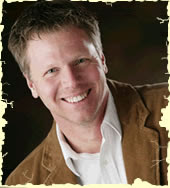
The author Arthur E. Levine (photo to left) describes our typical education system in this article by saying:
It puts all students through a common process tied to the clock; children progress based upon the amount of time they spend being taught in a classroom, with all students required to master the same body of knowledge in the same period of time . . . We now know that all students learn at different rates; the same individual even learns different subjects at different rates. It would make more sense, therefore, to have an education system that focuses on what students learn, rather than what they are taught, and sets common standards for what they must learn, rather than common amounts of time for them to learn those things.
First, I think our school system at DCG is implementing this idea in many different classes and with a variety of strategies. I still think as a whole our entire society needs to renew their concept of the effective educational model and begin to think in terms of learning and not just teaching. To evaluate the process on outcomes achieved instead of time spent.

When I had a construction business both the customer and myself wanted the same thing. We wanted the project completed fast and done right. Neither of us just wanted me to spend time working. We wanted the project done. Time was the enemy. Speed and efficiency made me money and gave the customer their product. It is not about working longer, it is about getting the job done.

Part of the teaching experience is seeing students process information and perform tasks proficiently at different speeds. An example of me as a teacher resisting this tendency can be seen each year in the shop during our nine week woodworking class with the eighth graders. If the above information presented by Levine is true (and, I know it is) why do 100 students in seven different classes all end up on the same day ready to begin staining their oak end tables? The answer is not something I want to brag about. It happens because I manipulate (as in, I slow down) the learning process for the first seven weeks. I do this by:
  1. limiting the amount of knowledge I present so that the faster students are continually hitting a wall (figuratively) and need to beg me to show them the next step.
  2. creating different standards of excellence to be reached. For example, the faster more proficient student may be asked to expend more energy or accomplish a task with out the benefit of "hidden" techniques or tools.
  3. having skilled students repeat a process they already understand by helping catch up another student.
Now, all of these techniques of manipulation have an education silver lining. Some student may produces a finer project, refine their skills, or develop leadership ability. My point is that the way the eighth grade class is set up I need to "manipulate" the learning process in order to manage the class. (Of course, a "better" teacher will suggest I create additional learning situations for the students, but, I would bet this teacher has not made one hundred oak end tables with one hundred thirteen year old kids! I don't want additional learning situations! I want order and efficiency.)

I assume many teachers feel the same way about progressing through the chapters of their curriculum. How can you have a few students in chapter 13 while others are still reviewing the material in chapter 8. In fact, if what Levine says is true then in a class of 25 students a teacher may have 25 different lesson plans.

And, this is exactly what I have set up in the seventh grade shop classes.

In the seventh grade classes I have a completely different instructional system organized. I literally have 18 different lesson plans all happening at the same time. The students work in partners, or alone, to acquire the knowledge and perform a task at a module in basically a three day period. Daily students move through these stations at different speeds depending on skill, previous learning, interest, motivation, and whatever else their personal repertoire of characteristics bring to class. We have modules that include construction, electrical wiring, computers, cnc lathes, assembly, etc. We add to them each year in the way of content, experience and instruction.

Some students successfully achieve in a class period what others struggle with for four days. Or, some students get interested in a station and hang around it for four days gaining additional knowledge and developing additional skills while others do the minimum work with the least amount of knowledge and move on to something they find more interesting. Concerning levels of interest in the variety of modules, the students have never agreed which one is the best module. What one student considers boring another student will consider their favorite.

In the seventh grade class we have the critical content and skill that is communicated to each student, but after that the sky is the limit. There can easily be additional modules added. The level of required skill and knowledge can be increased at the modules we do have. I have plans for three more modules for next year and students are consistently "experimenting" with the material and knowledge that is available. In fact, many of the students ideas have developed into the actual project that is now required at certain modules.

I am not going to change my nine week eighth grade woodworking class because it is what it is. Each eighth grader will build and finish an oak end table. I see students each year who could easily build the end table in 4-5 weeks, but if everyone is going to achieve at the level we want, some are going to have to engage in learning at a different level as we explained above.

But, I do wonder if our seventh grade classroom could contribute to what Levine calls a "revolutionary change" that "will necessitate an individualized, time-variable system of education." I like the idea. I have seen it work. I know Levine is heading the right direction and I know the answer is going to come in a classroom organized in an educational system that is understood by a society that sets priorities on learning and outcomes and not on the time spent teaching.

Could more classes be set up like our seventh grade modules? Would it be more effective? Would teachers enjoy the module set classroom? Do you wonder if China is doing this?

Mr. Wiemers
www.mrwiemersshop.com

Saturday, February 28, 2009

Wall Street Journal Quote

On most Saturday mornings Toni fries eggs in bacon grease and I load the toast up with real butter until it soaks through the back side. We then sit at the oak kitchen table that I built in 1986 and read newspapers and magazines while we eat our fried eggs and drink cappuccinos. Today was different. Toni said she was hungry for oat meal and since I wasn't about to extend any extra energy I agreed.

I came across an article in my copy of The Wall Street Journal entitled "Oops! I'll Do It Again. And Again. And Again . . ." that reminded me of a teacher inservice I interrupted five years ago. The quote in the WSJ said:
Students have shown that, while American students perform poorly compared with many foreigners of the same age, they are top of the charts when it comes to how well they think they have performed.
The line "they think they have performed" is the part that sparked my memory. Five years ago at an inservice we had an guest presenter share with us the new middle school model. The presenter went on and on comparing this great new middle school model of the twenty-first century to the archaic, ineffective junior high model of the 1970's. The meeting drug on as the speaker humored us with ridiculous comparisons which painted the picture that we were all idiots back in the 1970's.

Realizing that the room was void of any critical thinking at that point, I raised my hand to purposely interrupt this onslaught of propaganda to ask for an explanation of one key element. I said:
It appears from multiple reports that the United States has fallen behind several nations in areas such as science and math. I believe we are in 10th place and 14th place world wide and sinking. Yet, back in the 1970's with this so called "junior high model" we were leading the world in all areas of education. Do you think it is wise to mock the schools in the past who were leading the world in education? Has any one asked what are they doing in Japan? In Korea? In Europe? As a basketball coach I scout and research the teams that are beating us. And, I don't make fun of my school's past championship teams. So, before we jump to this new middle school model I want to know first, what are the other countries doing. And, I don't want everyone in the room to say, "Well, they don't test the same way we do" or "They only educate the smart kids." Bottom line, they are kicking our butts and the best AEA can do is make fun of our schools from the 1970's when we were kicking butt. You present us with this new middle school model that includes no research concerning the 10-14 nations that are crushing us academically?
With that the inservice was pretty much derailed. The presenter never regained his footing. No one answered the question. No one could answer the question. We just took a break and ate some cookies. Today several of us teachers still laugh about it and respond to most every inservice subject by mumbling at our table the question: "Is China doing this?"

Click here to see the Des Moines Register's World Class Schools for Iowa page. Notice the rankings of the nations:
  • In Science: the United States is now 29th
  • In Math: the United States is now 35th
  • In Reading: the United States score is not recordable due to a "clerical error"? What!?
Since the AEA could not anwer any questions five years ago, we were left with assumption, hear-say, opinions and "how we felt we were doing." The Des Moines Register now provides you with an online T/F quiz called Education: Truth or Myth. Take this quiz! See the world map with rankings. (Notice the three comments on this Des Moines Register page all deflect the results of these numbers as unreliable or insignificant. Well, as long as that is the way you "feel". Who needs truth and facts when we already feel so good.)

Mr. Wiemers
http://mrwiemersshop.com
PS - want more of the same? go here

Thursday, February 26, 2009

Teacher Unions

I really do not know much about teacher unions. I really haven't been paying attention. But, my friend and fellow staff member Eric Voelker had an editorial published in the Des Moines Register today titled Unions Should Offer Levels of Membership. (The full text is below.)

My experience with the teacher's union began and ended my first year of teaching shop. Two representatives came down to my shop. It was strange to see these two teachers walk into the shop. They explained membership dues and benefits. As far as dues were concerned I was taking home $900 a month and any dues over $1 were too much. (Yes, my contract pay has gone up since that time and unions will take the credit. But, I also have a part time job or two.) The big benefit they would provide would be in the case where I was fired. The teachers union would be able to rally around me and fight for my job if the administration ever fired me. At that point, being an arrogant young teacher/coach (unlike today, now I am old), I laughed and said, "I do not understand why I would want to work for somebody who wanted to fire me? I figure I would quit before they had a chance to fire me." That ended that attempt to proselytize me and I really haven't been approached since.

On a more intelligent level here is what Eric Voelker wrote to the editor of the Des Moines Register concerning a movement for mandatory union membership in the state of Iowa:

The Iowa State Education Association is lobbying the Legislature to pass a fair-share law. If passed, this law would unfairly mandate employees to belong to a collective group in an effort to share the cost of collective bargaining/contract management.

Having been part of the Des Moines Professional Firefighters Association and the National Education Association/Iowa State Education Association, I can say that it was indeed an exercise of my American freedom to choose to belong to these groups. I belonged to the Des Moines Professional Firefighters Association the entire time I was employed.

However, as time progressed, I dropped my association with the NEA/ISEA. I always supported the local initiatives and contract negotiations the ISEA local provided. What grew to be a deal breaker was that a good deal of my dues went to support the NEA and its liberal political agenda. Before I dropped I inquired about alternative forms or levels of association. It offered no options. There was no choice.

Rather than lobby for a law that grows government's regulation of this issue, the ISEA should simply offer choices in levels of membership.

- Eric Voelker, Dallas Center

Mr. Wiemers
http://mrwiemersshop.com

Saturday, February 21, 2009

Knowing vs. Understanding

(Below is an excerpt from Galyn Wiemers' book Hope for America's Last Generation. Some minor portions and some references have been changed to make it appropriate for a wider audience:)

A Multiplication Analogy
THERE’S A COP out many people take that bothers me. Whenever someone poses a question about some issue, many people become uncomfortable and are quick to give the “right” answer.” But the difference between knowing the right answer and understanding why that answer is right is huge.

The answers to math problems can be easily memorized (e.g. 7 x 7 = 49). In elementary school, my teacher told me to memorize my “times tables” so I could regurgitate the right answers on speed drills and math tests. However, if I had simply memorized the answers without truly understanding the concept of multiplication, I would have failed. Why? Because if I memorize 7 x 7 = 49 but the teacher asks me for the answer to 7 x 8, I won’t be able to figure it out. I haven’t really learned multiplication; I just know how to spit out a few right answers here and there. Only someone who understands how he got the answer to 7 x 7 will be able to figure out 7 x 8 on his own.

So it is with life. We should never simply accept an answer we’re given without fully understanding it. Living life this way is not a skill for the faint of heart. In fact, many people don’t think it’s necessary at all. They ask, “Why can’t you be satisfied with 7 x 7 = 49? Why do you question it? Why can’t you just believe it? Can’t you just accept it?” Yet we must continue to question because, even though we may already know the right answer, we will never have a deep understanding if we stop questioning.

People who seek deeper understanding are often labeled “difficult” or "rebellious" by those who love to spout the “right” answers. Yet doubters and skeptics are usually the only people who have a true desire to achieve something most people never achieve—a real understanding of what it’s all about. It takes time and discipline to go from a basic knowledge to a deep comprehension of it. Growing into understanding is a much longer, more difficult, and often very frustrating process for those who take this longer route. But, in the end, it’s the only route that leads to freedom.

Saying, “I don’t understand” even in the midst of people who are perfectly content to “know the right answer” can be scary. You have to stop worrying about what others think of you. You have to remember that seeking understanding with humility is the only way to honor the truth.

Tuesday, February 17, 2009

A Vision for Small Districts

In kindergarten I attended a small school with a total of 20 students in the entire kindergartner class. (See photo of me entering the school on the first day of school.) Thirteen years later I graduated from a small school with a class size of 21 students. (Below is a photo of me speaking at graduation.) Both of these schools are consolidated now and one of the buildings has been converted into apartments. Times and opportunities change. Small schools must see the big picture, be proactive and take charge of their own destinies before someone else tells them what the big picture is, takes away their options and they lose not only their destiny but their identity.

Steve Deace of WHO has written:

So don't wait for McCoy to call the shots. Small districts should look to partner with the other like-minded districts around them right now. Create regional schools that combine economics of scale, the noblest intentions of the
homeschooler and the romance of settings akin to the one-room school house of old. Break the mold with a form of country collectivism that is defined by traditional values and common sense instead of political correctness and junk educational theories. And then maybe, just maybe, execute things so well that rural Iowa starts filling up once again because its schools provide an experience to children and families that simply has no equal. To paraphrase a famous movie that succeeded for many of the above reasons: If you build it, they will come.

School Consolidation in Iowa

Trace Frahm, a friend from Walnut, Iowa sent me the following in an email yesterday:
Please read this information and draw your own conclusions. I am still
trying to get off the floor and recover after reading this.
His comments were in regard to a purposed piece of legislation here in Iowa. State Sen. Matt McCoy, D-Des Moines, said "that he would like to push legislation that would cut the number of school districts from 362 statewide to fewer than 150. Targeting districts with fewer than 750 students enrolled, the proposal also would establish that each of Iowa’s 99 counties would have one superintendent, business manager, curriculum director and transportation director, saving tens of millions of dollars in administrative expenses, according to the Register article. Districts would have three years to plan for the transition, according to the plan." (See whole article here)

Here is a list of schools that would be consolidated and their projected 2009-10 attendance. (Some schools like IKM and Manning have already combined their high schools and middle schools.): AGWSR 661.9, Adair-Casey 351.5, AHST 663.8, Akron-Westfield 535, Albert City-Truesdale 240, Alburnett 572.9, Alden 258, Allison-Bristow 304, Alta 512.8, Andrew 297.6, Anita 272.3, Anthon-Oto 271.5, Armstrong-Ringsted 338, Ar-We-Va 344.6, Audubon 627.7, Aurelia 285.2, Battle Creek-Ida Grove 654.6, Baxter 383.4, BCLUW 621.4, Bedford 536.3, Belle Plaine 617.5, Bellevue 620.7, Belmond-Klemme 738.5, Bennett 200.8, Boyden-Hull 623.2, Boyer Valley 435.9, Brooklyn-Guernsey-Malcom 540.5, C and M 200.6, CAL 292.3, Calamus-Wheatland 498.4, Cardinal 631.3, Central 530.2, Central City 465.3, Central Decatur 675, Central Lyon 691.2, Charter Oak-Ute 321.9, Clarksville 371.8, Clay Central-Everly 394.2, Clearfield 92, Collins-Maxwell 531.5, Colo-NESCO 474.4, Coon Rapids-Bayard 444.4, Corning 475.7, Corwith-Wesley 134, Danville 486.3, Deep River-Millersburg 167, Delwood 230.3, Denver 744.1, Diagonal 90, Dows 142.1, Dunkerton 466.8, Durant 575.9, Earlham 640.6, East Buchanan 558.9, East Central 395, East Greene 369, East Marshall 711.6, East Union 498.6, Eastern Allamakee 422, Eddyville-Blakesburg 731, Edgewood-Colesburg 487, Eldora-New Providence 643.8, Elk Horn-Kimballton 260.9, Emmetsburg 695.7, English Valleys 421.9, Essex 249, Exira 276.1, Farragut 263.4, Fredericksburg 264, Fremont 211.4, Fremont-Mills 469, Galva-Holstein 453.2, George-Little Rock 488.4, Gladbrook-Reinbeck 694.9, Glidden-Ralston 357.8, GMG 355.2, Graettinger 233, Greene 286, Griswold 639.2, Grundy Center 625.8, Guthrie Center 546.8, Clayton Ridge 669.2, HLV 375.2, Hamburg 295.2, Harmony 427.1, Harris-Lake Park 288, Hartley-Melvin-Sanborn 667.4, Highland 653.6, Hinton 563.7, Hubbard-Radcliffe 416, Hudson 678, IKM 415.7, Iowa Valley 659.2, Janesville 338.9, Keota 344.6, Kingsley-Pierson 457, Lake Mills 623.9, Lamoni 341.4, Laurens-Marathon 359.6, Lawton-Bronson 605.3, Lenox 362.3, Lineville-Clio 95.6, Lisbon 675.2, Logan-Magnolia 643.1, Lone Tree 385, Lu Verne 74, Lynnville-Sully 469.7, Madrid 627 ,Malvern 357.8, Manning 412, Manson-Northwest Webster 658.9, Maple Valley 521.6, Marcus-Meriden-Cleghorn 459.1, Martensdale-St. Marys 533.7, Melcher-Dallas 347, Midland 586.2, Montezuma 487, Moravia 318, Mormon Trail 281.1, Morning Sun 217, Moulton-Udell 226.5, Mount Ayr 627.5, Murray 280, Nashua-Plainfield 711.1, New London 552.5, Newell-Fonda 426.9, Nishna Valley 209.2, Nodaway Valley 711, Nora Springs-Rock Falls 422, North Central 506.1, North Iowa 539.9, North Kossuth 331.3, North Mahaska 537.7, North Tama 531.3, North Winneshiek 302.9, Northeast 555, Northeast Hamilton 257, Northwood-Kensett 518.1, Odebolt-Arthur 354.5, Ogden 699.1, Olin 228.2, Orient-Macksburg 215, Paton-Churdan 195.3, Pekin 727.6, Pleasantville 681.5, Pocahontas 549.6, Pomeroy-Palmer 211.3, Postville 604.3, Preston 346, Remsen-Union 418.9, Riceville 293.8, River Valley 465.4, Riverside 668.9, Rock Valley 570, Rockwell City-Lytton 492.1, Rockwell-Swaledale 313.6, Rudd-Rockford-Marble Rock 536, Ruthven-Ayrshire 250, Sac 432.3, Schaller-Crestland 392.4, Schleswig 311.8, Sentral 162.1, Seymour 245.1, SCMT 453.4, Sidney 354.8, Sigourney 584.7, Sioux Central 437, South Clay 154, South Hamilton 699.2, South O'Brien 646.9, South Page 226.3, South Winneshiek 616.3, Southeast Warren 569.2, Southeast Webster-Grand 564.2, Southern Cal 512.5, Springville 443.2, St. Ansgar 680.3, Stanton 208.1, Starmont 669.8, Stratford 212.8, Sumner 580.2, Terril 160.1, Titonka 175, Treynor 591.9, Tri-Center 725.6, Tri-County 317.6, Tripoli 495, Turkey Valley 465.1, Twin Cedars 423.7, Twin Rivers 176, United 353.4, Valley 477.5, Van Buren 736, Van Meter 584.7, Ventura 283.8, Villisca 383.8, WACO 524, Wall Lake View Auburn 506.8, Walnut 220.6, Wapsie Valley 699.8, Wayne 533.6, West Bend-Mallard 347.1, West Burlington 452.3, West Central 304.2, West Hancock 616.1, West Harrison 503.2, West Monona 662.4, West Sioux 715.7, Westwood 589.7, Whiting 195, Winfield-Mount Union 388.5, Woden-Crystal Lake 137, Woodbine 436.4, Woodbury Central 594.1

In response to an email from Trace Frahm of Walnut, Iowa (Walnut is on the above list) I told him this was unbelievable and probably simply "shock" legislation in an attempt to prepare us for something we would consider more tolerable.

Trace then replied:
In answering your question, yes, we think that this is shock legislation to prepare us for radical change in education at some point in time. But Iowan's voted this man into office so are we really that surprised? A county supervisor responded to the Feb 11 post saying that the state is not only trying to consolidate schools but also cities where they are wanting to create huge regional departments. He said that this looks good on paper in Des Moines but when you leave the capital and drive out into the state it becomes a huge mess very quickly. This is why I wanted friends and local leaders to see this so that our community can see this and I can say that they were warned. When Vilsack was governor I had heard that our public servants in the statehouse had divided Iowa into 5 large consolidated zones where you have one court house per zone and one school per county or less. I didn't know what to think of it then but now we know that they will keep pushing for this until they get it. Someone told me that public education is leaving the mainstream and is moving towards special education, alternative schools, and welfare based education. And mainstream America is moving the other way towards school choice options, homeschooling, private, as a response to radical stuff like this.
Read an article from the Des Moines Register in response to this failing legislation.

Mr. Wiemers
http://mrwiemersshop.com/

Monday, February 16, 2009

Suggested Blog Reading

Interesting blog by a former teacher of the year followed by insightful comments concerning creativity in classroom and the educational system in general HERE

Mr. Wiemers
http://mrwiemersshop.com

Sunday, February 15, 2009

This Week's Issue

Four comments on four articles from the Feb. 11 issue of Education Week:
  • When comparing U.S. teacher professional training to top-performing European and Asian countries the U.S. teacher training takes place in isolation and not in on-the-job training or in a school-based setting. Training that included less than 14 hours had little effect but programs that included 30-100 hours over six months positively influenced student achievement. ("Staff Development for Teachers Deemed Fragmented")
  • Interactive web galleries and video provide a great alternative for field trips. In seasons of budget reduction and the need to maximize our classroom time some of these sites provide resources for online field trips or EFT, Electronic Field Trips ("Virtual Field Trips Open Doors for Multimedia Lessons"):
    1) The Virtual Smithsonian,
    2) Jet Propulsion Lab at NASA,
    3) Nationial Geographic Expeditions Online,
    4) Ball State University Electronic Field Trips,
    5) Colonial Williamsburg
  • There is a need and a demand for students to graduate with career skills, but in the push to prepare all students for college career skills get neglected. Business and industry groups say that high-wage jobs not requiring a bachelor's degree often go unfilled. "Industry after industry is going after high-skilled laborers and cannot find them," says a former assistant U.S. secretary of labor. ("Career Skills Said to Get Short Shrift")
  • There is a push to use graphic novels (comic books) to capture students for reading. "There are multiple studies to suggest that students who read comics go on to read more, and to read more varied literature," said an English professor. This article also included an image from a comic book series produced by middle school students. ("Scholars See Comics as No Laughing Matter")

Mr. Wiemers
http://mrwiemersshop.com/

Thursday, February 12, 2009

Mr. Klocke's Science Resources

One of the most active web pages at the DCG middle school is Mr. Klocke's website page called "Class Notes, Review and Practice, Powerpoints, and lesson plans, and gizmos." Any middle school science teacher in America, or around the world, will want to check this site out. The current technology revolution brings Mr. Klocke's insight into science and his gift of communicating with students right to your computer. Mr. Klocke is renown for his ability to make a vigorous science curriculum palatable for each and every student. His notes, reviews, powerpoints and more are now available for any teacher or middle school student who has access to the Internet.

At this week's inservice Mr. Klocke shared these two websites with the staff that most teachers will find useful:

Vocabulary in the Shop

Since one of our building goals is focused on vocabulary we spent yesterday afternoon's staff inservice reviewing Marzano's six steps for effective teaching of vocabulary. They are:
  • Provide description, explanation, example
  • Ask students to restate in their own words
  • Ask students to construct a picture, symbol or graphic
  • Engage students in activities that help them add to their knowledge
  • Ask students to discuss terms with one another
  • Games that allow them to play with terms
What does this look like in the shop? Well, for example, the other day I was giving the eighth graders a demonstration on how to glue together boards to make their table tops. After I had squeezed the glue across the edge of the board I said to them, "redistribute the bead of adhesive equitably." As expected, a couple of students quickly replied, "What did you say." So I translated my words into middle school language, "smear the glue on the edge of the board so there are no dry spots left." Then we joked around with the original statement a couple of times and I explained the phrase "bead of glue" and "adhesive".

The other day I called the class over for a different demonstration and said, "What I am about to show you will be advantageous for you." Because of the teaching staff's focus on vocabulary this year the students are acutely aware, it seems, of words they do not use in their own daily vocabulary and they asked, "what is advantageous?" I gave them a quick multiple choice answer asking them to tell me which of my following statements correctly defined advantageous:
  1. advantageous is a disease a person gets from watching too many Super Bowl commercials. This meaning can be recognized by the "ad-" which refers to advertisement and the "-ageous" which distinguishes it as a disease.
  2. advantageous refers to something that is a benefit to you or brings you some advantage in some situation or process.
  3. advantageous is a corruption of an old, archaic English word for bandage.
After a few moments of discussion they unified on choice 2 but thought choice 1 was funny and had to consider choice 3 because they really didn't understand what that one meant.

I agree with Marzano, of course, even though he was not presented as the god of vocab in yesterday's inservice but simply as a voice of one who has carefully researched and made some intelligent conclusions. (And, made a lot of money selling his book and doing seminars.) But, I would add my own un-researched and less-intelligent opinion concerning teaching vocabulary:
  • Sometimes we created artificial learning situations expending 110% of our effort for about 5% results. I do not like artificial learning situations because we live in a real world and habitually ignore that it is constantly teaching us.
  • Most (or, 95% - an undocumented number) of my personal learning of vocab seems to have come from hearing conversations, reading, or listening to other people talk. I heard or hear words and begin to use them.
  • Concerning preparing students for standardized testing one of the greatest means of decoding a word is to understand etymology. To understand English a little bit of insight and experience with Latin and Greek provides a great basis for student empowerment in decoding words. Here 5% of knowledge is going to provide 100% improvement in vocab ability (again, these are undocumented, estimates from my own imagination, but the point is: a little knowledge of Greek and Latin will provide greater insight into vocab. This would be very beneficial on standardized testing.)
  • When I go to the men's room in an Italian restaurant (Macaroni Grill, for example) they are not playing music but instead of reading from an Italian-English dictionary . . . should we be playing the vocabulary words anticipated on the standardized tests over the intercom and over the speakers on the school buses?
I will be addressing the above points in my new book "A Shop Teacher's Guide to Improving Vocab". The book will be just a little longer than this blog because it will include an index. Don't miss my coming seminars where you can buy a signed copy of this book!

Mr. Wiemers
http://mrwiemersshop.comLink

Sunday, February 8, 2009

Middle School Web Highlights

Mr. Wiemers
http://mrwiemersshop.com/

Saturday, February 7, 2009

S.O.T.E.L. for Self-Evaluation

I received this week's copy of Education Week and enjoyed the article on a preparatory charter school in Boston for middle school children. Although most the students who enter this school in sixth grade are behind at grade level (less than 1/3 are at grade level for math) by the end of sixth grade they are outperforming other district students and 97% who move onto high school will graduate. They claim the key to their success is "blending tough academics with intense student support in a small, highly structured setting." A caption under a photo of students in uniform dress (khakis and ties) passing to the another class says, "Transitions between classes are silent, reflecting a serious culture."

In the commentary section is an article that contains a quick evaluation list I found useful for appraising my own personal significance as a teacher. The acronym they used was SOTEL which stood for Safety, Objectives, Teaching, Engagement and Learning. When translated these words mean:

  • A climate that's conducive to intellectual risk-taking
  • The lesson has a clear purpose
  • Learning is skillfully orchestrated and artfully differentiated
  • Students are paying attention and their minds are active and involved
  • The teacher is using on-the spot assessment to fine tune their teaching

Sounds like a successful coach's daily practice routine. In the past when I have felt strongly about communicating successfully from an instructional position I would simply engage in the education process as if I were coaching.


Mr. Wiemers in a Time Out in Tulsa, Ok. in 1989
- During a time out SOTEL is essential. The coach must apply on the spot assessment and clearly communicate the team's purpose by any form of differentiated learning available to a group of athletes who are paying attention and about to resume the game that will demand they make on the spot decisions and take risks that will reflect their learning process.


Mr. Wiemers
http://mrwiemersshop.com/

Thursday, February 5, 2009

Internet

Check out this blog about getting students on the web at school: http://blogs.edweek.org/edweek/LeaderTalk/

Mr. Wiemers
http://mrwiemersshop.com

Early-Literacy Study

In the January 21 issue of Education Week an article reviewed a report that analyzed the results gained from early-literacy (ages 3-4) studies. One expert warned that the results of the panel's report may send the message that will cause "practitioners" (I assume he was referring to teachers) "to further narrow instruction and focus on the discrete skills." The skills that the report listed as the moderate to strong skills necessary to predict overall literacy development were:
  • Alphabetic Knowledge: knowledge of names and sounds associated with printed letters
  • Phonological Awareness: detecting, manipulating, or analyzing parts of words
  • Rapid Automatic Naming of Letters/Digits: naming a sequence of random letters or numbers
  • Rapid Automatic Naming of Objects/Colors: naming a sequence of random sets of pictures or objects
  • Writing or Writing Name: writing letters in isolation or one's own name
  • Phonological Memory: remembering spoken information for a short period of time
The article has a quote warning that the panel's report "places a very strong emphasis on the narrow range of skills related to decoding, phonemic awareness and other memory kinds of skills." The point being that other areas that need to be developed such as vocabulary, oral language and background knowledge may not immediately show their value in reading ability until third or fourth grade.

The article ends with another warning: "What we always have to keep in mind is that we are dealing with very young children, so the instruction needs to be playful and engaging." I have always thought instruction for any age should be engaging and if it can be presented as "playful" instead of "work" that is also a great advantage.

Mr. Wiemers
http://mrwiemersshop.com/