Showing posts with label memories. Show all posts

Tuesday, August 18, 2009

First Day 2009

Here is the traditional first day of school photo. I took my first son with me to his first day of school in 1988. Now this morning, 21 years and 6 sons later, I have taken my 8th grade son with me to the first day of school for the last time. Next year he goes to high school and I stay at the middle school.

Here is today's character counts shuffle with 450 middle school students:


Mr. Wiemers
http://mrwiemersshop.com

Saturday, July 25, 2009

First Day of School 2001

Since school is getting closer to starting again, I thought this was interesting. I came across this family photo of the first day of school from 2001. Jacob, the youngest, was on his way to kindergarten. He is in eighth grade this fall. Justin, our oldest, was a senior. He is broadcasting for the US Marines in Japan now. Paul, the barefoot one, is a snowboard instructor and life guard in Colorado. Benjamin, number three, was a distinguished graduate and earned the Iron Man Award at the US Air Force's basic training this summer. Hawkeye, number four, is going to college this fall and jumped out a plane for the first time this summer. Zac, number five, will be a high school junior and one of Valley's top distance runners again this year.

Mr. Wiemers
http://mrwiemersshop.com

Thursday, May 21, 2009

Mr. Orlyn Wiemers, Supt.

As another school years comes to a end I would like to share these photos of my Dad, Mr. Orlyn Wiemers. These photos represent the 44 plus years my Dad spent in education. He taught vocational agriculture in the shop from 1957-1963. From 1963-1968 he was a principal. Then in 1968, at the age of 32, he became a superintendent. My Dad spent the next 33 years as a superintendent until he retired in 2001. Even then, he served as an itinerant superintendent when he was needed for the next couple of years. Today he is retired and spends most of his time maintaining the farm that he grew up on and doing woodworking. I frequently meet and talk to teachers that tell me how much they appreciate what my Dad did for them. He helped many of them get started in teaching and many more describe the stability his leadership and management brought to their school districts. I will be spending time this summer with him on his farm roofing a few of the buildings that we have not yet had time to get done.

My Dad, Shop Teacher and Superintendent

Friday, March 13, 2009

What We Needed To Know in 1902

The 1902 "Busy Man's Friend"

In 1902 J. L. Nichols & Co. published a book by Professor J. L. Nichols called The Busy Man's Friend or Guide to Success by Facts and Figures. Originally written in 1896, this book begins with a quote from Gibbon, the author of the Decline and Fall of the Roman Empire:

Every person has two educations, one which he receives from others, and one more important which he gives to himself.
This book fills 250 pages with the best advice, guidelines, formulas and information needed to be successful and efficient in 1902. The book includes information concerning receipts, notes, bills, banks, power of attorney, law, legal forms, corporations, counterfeit money, swindling schemes, facts from the census of 1900 and computations. Below is some of the material from the section on computations that were used in the day. Remember vocational education would not be added to the public schools with federal support until the Smith-Hughes Act of 1917.

On page 223 we find "A Complete Set of Carpenter's Rules" including information on how to use a carpenter's square. I learned how to use a carpenter's square from an old carpenter many years ago when he taught me how to figure the length of rafters and layout a set of stair stringers. This section also includes the following information and more:
  • How to find the number of shingles for a roof
  • How to find the number of laths for a room (laths were nailed to the studs and covered with plaster before sheet rock was developed)
  • How to find the area of a gable
  • How to find the number of feet of stock boards to cover a house or barn

Other useful information provided for a man in 1902 included:

How to find the size of a barrel.


How to find the number of common bricks in a wall.


How to calculate the weight of coal in a box.


How to find the distance traveled in ploughing.


How to figure the capacity of a wagon box.


How to measure ear corn in a crib.


How to measure hay in the mow or stack.


How to figure the advantage of an evener on a neck yoke for horses or oxen.

This book also explains how to secure a signature from a person who cannot write:


In the section of this book that addresses mortgages the author entitles the section: The Mortgage Grip Crushing the American People. The book then states the following facts to prove that "if the farmer does not lift his mortgage, it will lift him":
In 1890 there were 4,777,698 mortgages in force in the United States,
amounting to $6,019,679,985. The annual interest charged on these is
$397,442,792.

Monday, March 2, 2009

The Paper Route

When I was in fourth grade, still back in the 1960's, my mom let me sign up for an afternoon paper route to deliver the Mason City Globe Gazette. This is when my paper route education began. (You can see my dad's 1963 Chevy in the background of this photo. I remember the day we got it. I helped wash the old 1955 Chevy one last time before dad traded it in. Dad was a vocational agriculture teacher and taught shop in the 1950's, but in 1963 he became a school administrator.)

Every weekday after school I would have to start my paper route. I learned many things right away. For example, a man who has worked all day will want his afternoon paper ready to read when he gets home at 5:00. The man does not care if the paper boy wanted to stop and play with friends or if the paper boy didn't get started on his route on time. The man wants his paper and he is not afraid to tell a fourth grader not to be late with the paper tomorrow.

Concerning dogs: When a dog begins to chase you, pedal your bike faster and lead the dog away from where the owners can see him. Then let the dog catch up to you, steady your bike and kick the dog in his head as hard as you can. The dog will still bark at you and he may still chase you, but he will not want to catch the paper boy again. If you fail to do this correctly your jeans will get ripped and you may have teeth marks in your leg. Also, if you get scared and do not control your kick you could crash your bike and the dog will end up on top of you. (This is the worst case scenario.)

Another thing the customers taught me is that wet papers are not readable. There is a big difference between getting the paper to the right house on time and getting it there dry. Customers want the whole package: right location, on time and dry.

Each Saturday I would have to visit each customer and collect 50 cents for the week. If they were not home or did not have the money I would have to return later in the day. Customers did not like to fall behind on their bill. They wanted to stay current and would be upset if I let their bill get up to $1 or $2.

I quickly figured out that the more papers I delivered the more money I would make with basically no extra effort. I walked by houses every day that did not get the paper. I started visiting these houses and explaining the benefits of getting the daily Mason City Globe Gazette. Within a month my paper route had doubled. The representative of the paper from Mason City showered me with gifts and prizes and I was hooked.

I delivered papers for years. I was the one who delivered the paper that told of the first moon landing. I remember the headlines when President Nixon resigned. The headlines were simply big block letters that said, "I QUIT." I also remember Hank Aaron chasing Babe Ruth's home run record, and finally, getting to deliver the big one: "715, Move Over Babe!"

I delivered the afternoon paper until I was in junior high. Then, because of sports I moved to a morning route and began to deliver the Des Moines Register.

My education would have been much, much different if I had not had that one last class each afternoon after school. The paper route class that included responsibility, speech, history, money, sales, and, of course, self-defense.

Mr. Wiemers
http://mrwiemersshop.com

Thursday, February 26, 2009

Mr. Wiemers' Slideshow

Ok, what you see below is my attempt to use PhotoBucket and embed a slide show. I must say that my inspiration was Mr. McClung famously known for his sixth grade blog site Mr. McClung's Sixth Grade World . I saw he had used PhotoBucket to make a slide show and tried it myself. I was really aiming to get this slide show in the right column with the other gadgets but it ended up here as a blog. So, please forgive me, this was not suppose to be a blog but here it is, at least, for now. We now have another tool to develop and work with:

Tuesday, February 24, 2009

Things Change

I was talking with my wife about things that have changed over the years. Often times a conversation like that focuses on the things that have changed for the worse. (I will spare you the examples.) In this conversation we focused on what now seem like ridiculous rules or standards that have been replaced with what now seem like obvious common sense practices and guidelines.

Forty years ago we remember playing on school playgrounds with metal monkey bars and falling into gravel if we slipped. Blue jeans with rivets on the pockets (basically, all jeans have rivets on the pockets) were not allowed in school because they scratched the chairs. Belts were required dress code or else you faced discipline. Whole milk was a standard option at lunch.

Toni and I also remember that women had to wear dresses unless the temperature fell below 15 degrees, then they could wear slacks. Even during my first years of teaching the head of the house (a man) would have a different contract and different pay than his wife (a woman). I remember athletes sitting on the bench because their hair was too long. I remember when skipping a water break during practice meant you were tough but lifting weights was bad because it would mess up your jump shot. So, because I wanted to be tough and have a good jump shot I didn't drink water or lift weights. Looking back I now realize I was weak and dehydrated.

In the next few years how will we view our current standards for the management of technology? Our next challenge is how do teachers of my generation teach technology to the students of this generation. I began teaching and coaching using carbon copies and a mimeograph machine. I remember the ease and amazement of using a Xerox copy machine for the first time and thinking of the incredible potential these machines had.

For sure, one class we will never need to teach students is "How to Send a Text Message with a Mobile Phone." In fact, it may not be a matter of teaching technology as much as it is helping make technology available.

My boys at home laugh at my inability to text. They talk about my early days of texting (a month ago) when I did not know how to use the space key and all my messages were some kind of encrypted code. My sons have the ability to text in class with one hand in their pocket while looking at the teacher. I know they do this because they will reply to my text messages any time of day. When will schools embrace cell phones? Should they? I do not know. I will never have to make that decision. But, I will say this: Wouldn't it be less disruptive to the class for the front office to text a student that they want to report to the office than to do an all-call over the intercom system? I don't know if that is a good idea, but I do know it was a good idea to remove the concrete and gravel from under the monkey bars.

Below is a photo of my six sons from five years ago. Today they are a Combat Correspondent in the United States Marines, a certified snow board coach in Colorado, training to be an engineer in the United States Air Force, a senior in high school heading into economics and jazz music, a sophomore in high school and a student in my middle school. The youngest one does not have a cell phone but he does have his own facebook and a large online fan following for movies he and his brother and some friends have made. I have not taught them anything about technology. They laugh at my lack of it and tell me constantly to get a facebook so people know I exist!

Mr. Wiemers
http://mrwiemersshop.com

Tuesday, February 17, 2009

A Vision for Small Districts

In kindergarten I attended a small school with a total of 20 students in the entire kindergartner class. (See photo of me entering the school on the first day of school.) Thirteen years later I graduated from a small school with a class size of 21 students. (Below is a photo of me speaking at graduation.) Both of these schools are consolidated now and one of the buildings has been converted into apartments. Times and opportunities change. Small schools must see the big picture, be proactive and take charge of their own destinies before someone else tells them what the big picture is, takes away their options and they lose not only their destiny but their identity.

Steve Deace of WHO has written:

So don't wait for McCoy to call the shots. Small districts should look to partner with the other like-minded districts around them right now. Create regional schools that combine economics of scale, the noblest intentions of the
homeschooler and the romance of settings akin to the one-room school house of old. Break the mold with a form of country collectivism that is defined by traditional values and common sense instead of political correctness and junk educational theories. And then maybe, just maybe, execute things so well that rural Iowa starts filling up once again because its schools provide an experience to children and families that simply has no equal. To paraphrase a famous movie that succeeded for many of the above reasons: If you build it, they will come.

Sunday, February 15, 2009

Protesters and Cursive

During my first three years in school my dad spent the summers taking classes at universities. It was during these years I remember hearing, but not understanding, words like scholarship, four-point-o, doctorate and degree. Dad would also bring presents when he came home. One time I got a bike. It was a great, life-changing present. The summer before third grade my dad, age 32, received his first offer to serve as the superintendent of a school system.

Dad finished all his classes, went to an interview and came back with a job. This meant I would be attending third grade in the new school half way across the state of Iowa. Several things happened that first year in this new school system to test both my dad as a superintendent and me as a third grader. I remember my dad having to face students protesting the Vietnam War. They came to school wearing black armbands and got everyone all stirred up. My dad had a simple solution for these student/protesters: take off the black armbands. They did, and that ended that issue.

In the third grade classroom I also had an unexpected surprise. The very first day of school my new teacher began to write on the board by weaving her letters together without lifting up her chalk. Very confusing. I could not read what she was writing. My concern intensified when I noticed that all of the other students in third grade could decode this fluent, interlaced form of communication that continued through out the first day of school. In fact, the students began to write the same way. How do you raise your hand in a room full of people and say, "Excuse me, I can't read that." I didn't know what to say back then, and I still don't know what I should have said.

At my old school this advanced level of penmanship was reserved for third graders. I had seen this system of symbols on an older students discarded homework blowing across the playground at my old school. But, in my new school cursive was introduced and practiced at the end of second grade. I realized that the kids at this new school were all geniuses and that I was really not ready for third grade. I remember the teacher being frustrated and treating me like I was dumb. She wasn't sympathetic that I had no idea how to read or write cursive. In fact, she appeared to think I had not been paying attention. I came to hate cursive and had terrible penmanship. At first I did my assignments twice. First, I would turn in the neat, printed version that would be rejected, then I would turn in a barely legible cursive version. I consistently got D's in writing up through sixth grade.

All things considered, I liked my new school. During recess the cutest girl in class would chase me around the playground and try to kiss me. The class bully wanted to fight me. So we fought. I won and we became friends. We only had five days of school in January that year because of an incredible amount of snow. We ended up having to go to school on a Saturday which caused us to miss Saturday morning cartoons. My class was mad at me because my dad had made the decision to go to school on a Saturday. (At home I had expressed these same sentiments as I lobbied in vain for the cause of the students.) In my own terms and level of understanding I tried to explain to my classmates the state's mandated number of school days, but they would have none of my excuses. They knew my dad was superintendent and believed if he wanted to he could just cancel school all together.

Saturday, February 14, 2009

State Championships and Valentines

A year ago I took my Advisory class on a field trip to the Iowa Hall of Pride. While I was there I counted thirteen state championships that were won by my wife Toni and me. Actually, Toni had won thirteen and I had won zero. So, here is a happy Valentine's day blog for my high school hero, Toni Mohr. I first heard about her state performance in 1975, saw her play on TV in the 1976 girls' state tournament and I still have a sports magazine with her on the cover from track season in the spring of 1976. From 1975-1978 Toni won 13 state championships. In 1979 I took my high school hero on our first date. By 1981 my hero had become my sweat heart and we were married. Toni went on to set records in college and was the District Track coach of the year in 1985. In 1993 Toni was inducted into the Iowa Girls' Track Hall of Fame. Now, on Valentine's Day in 2009, after 27 years of marriage, we are going to spend the day shopping and the evening at home grilling steaks on our deck in the snow and watching the movie "Hitch." Happy Valentine's Day, Champ!

Monday, February 9, 2009

Teaching the Second Generation

I know many teachers experience teaching into a second generation but it is still a unique and nostalgic experience for each of us when it happens for the first time. I know that some of the junior and senior girls from my first head coaching position in 1980 are now grandmothers but it is different when you get to teach and coach the parents and then the children.

In 1985 Andy was a freshman. He was in my shop class and was a very good athlete on the basketball and track teams I coached. Besides being a great runner Andy also played guitar. I remember the two of us having a jam session with our guitars at my house on at least one occasion while he was in high school. After a couple of years as a high school teacher life called me to an odyssey that would take me through factory employment, private schools, non-profit corporations, entrepreneur projects, a speaking schedule, and also, newspaper delivery and McDonald's drive through work. For the first few years some of the guys from Andy's high school would call and update me. They said they won the conference running my full court press for the next couple of years and they said Andy graduated and headed to California. That was the last I heard back around 1988.


Mr. Wiemers (top left) and Andy (standing on the right side) in a track photo from 1985.


Sometime around 2003 the main office at the middle school I now teach in said there was a family enrolling their three children in our school that had commented on the name of our middle school shop teacher. The father had said his high school shop teacher was also a Mr. Wiemers. The office didn't remember who it was and I dismissed it as interesting but not worth pursuing. One thing led to another and eventually I realized there were three of Andy's children in our elementary schools and they were headed for our middle school. First came Skylar who I had in 6th, 7th and 8th grade shop. Skylar was also one of my track managers. Skylar is a senior in high school this year. Next came Hunter who, like his dad, was also a great runner for my track team. One night after practice Hunter commented on the difficulty of the workout, but, of course, his comment just set his dad up to recall stories of track practices 20 years early before Wiemers had mellowed out. Hunter was basically told that middle school practice with Wiemers in 2006 was nothing like high school practice with Wiemers back in 1985.

Today in class I have Andy and his wife's youngest girl, Wynter. (I remember when Andy and his wife started dating.) Wynter, like the rest of her family, is a great person and has a lot of friends. She glares at me when I call her Skylar by mistake. I just laugh and tell her that she should be glad I don't call her Andy. (See photo taken today of Wynter and myself during first period shop class.)

Andy and his wife are a testimony to what is good about families and values. I can not tell you how proud I am to be able to say that I know them and that I have been a small part of their lives.

Mr. Wiemers
http://mrwiemersshop.com/

Saturday, February 7, 2009

The Paper Airplane

When I was in second grade throwing paper airplanes seemed to be an issue in the older classes. I remember hearing teachers discuss this behavioral problem and their concern for the lack of discipline in this new generation of kids emerging in the 1960's. Of course, my dad, being the building principal, was concerned about school discipline, but I think he also liked paper airplanes.

I say this because it was during this paper airplane frenzy that one night at home he showed me how to turn a simple sheet of paper into a paper airplane. Now, I am not talking about one of those paper airplanes that float like a leaf falling from a tree on a windless day in October. No, I am talking about a paper airplane design that is even yet to this day called "The Arrow" on the internet (see here for the name and the proper folding technique). I was amazed by so many aspects of the paper airplane concept. Not only did I now possess the knowledge and power to create a paper airplane, but I could throw this thing and it would fly far and straight. For the next several weeks everything that could be folded was turned into a paper, or cardboard, or plastic airplane. I still can feel the rush of excitement thinking about creating and throwing these planes as a second grader.

Well, soon the day came at school when the teacher left the room for a few minutes while we students were suppose to be reading something or working on an assignment. I had been waiting for this moment. I wanted to demonstrate to my fellow second graders this marvelous thing called flight. I quickly converted a piece of paper into "The Arrow", stood up and threw the thing across the room. Even I was captivated by the height of the flight and amazed by straight line trajectory of this paper airplane. It flew quick and straight and high until it stuck into blinds of one of the windows at the top of the wall where it met the fifteen foot high ceiling. There it stuck and there it stayed.

The student's gazes of amazement turned quickly from the plane, to a brief glance at me still standing with my arm in throwing position, then they looked straight back to their assignment to gain the appearance of having seen nothing. They were completely innocent, but I was still standing with my plane stuck fifteen feet up on the back wall with a class full of witnesses. The plane was high in the window blinds of the back wall; the back of the room where the teacher is constantly facing when she addresses the class. (These windows can be seen in the picture of this blog.) I had no idea what to do. I could think of no other option but to blend in with my classmates and return to the assignment.

I knew that when the teacher returned to the room she would see the plane stuck high in the blinds the instant she entered the room. As I waited for her to return, I looked a couple of times at the plane hoping it would fall and I could quickly go destroy the evidence. But, instead, it stayed firmly in the blinds, hanging out like a big arrow pointing at me and what I had done.

A few minutes later she entered the room, resumed class, switched subjects, took us to lunch, returned from recess, had more classes and sent us home. I never looked at the plane when she was in the room. When we went home at the end of the day I took one quick look at it before I left the room and then I worried about it all night. The next morning the plane was still there. So it went day after day for a couple of weeks. It got to the point that the plane was part of the class decor, it seemed to belong there now. I worried less and less about the plane hanging fifteen feet above the class until I forgot about it. No one looked at the plane, no one thought about the plane, no one even remembered the plane. And more, the teacher had never even seen the plane. But, it was still there . . .

Then one day, like an explosion in the midst of a quiet class, busy with their assignment, the teacher shouted, "Who did that!" We all jerked our heads up and snapped to attention with no idea what she was talking about. We all looked up to see the teacher pointing at the back of the room towards the ceiling . . . oh, yeah, I remember . . . the plane. Judgment day had come. My heart started racing. I started to feel very hot. I didn't know what to do but to sit quietly and appear to be consumed with getting my assignment done. None of the kids said anything. They appeared to have forgotten the whole thing. Maybe they had. I will never know. I never talked about it again . . . well, at least until right now.
Since my Dad's paper airplane instructions in the 1960's I have shared the folding technique of "The Arrow" with my own boys and many students from the 70's, 80's, 90's and 00's (or, whatever we call 2000-2009). The reaction is still the same. They all feel empowered and they fly everything that will fold.

Flag Poles and Clean Hands

I recall several things from second grade. My dad was the building principal and we had a pretty good basketball team. I remember looking down from the open hallway above the gym one day and watching my dad and one of the coaches tape the new hash mark lines onto the basketball court before a game. (I am the tall kid in the back row, the fifth boy from the right, standing directly under the G quarter note with an A in front of it and another G after it.)

When I saw my dad at school I had to call him Mr. Wiemers. That was his rule, but, at the same time, whenever he saw me in the hallway he would whistle real quick so I would turn around and wave at him.

Second grade was the winter I tried licking a flag pole during recess. I did it three or four times before I decided that this behavior made my tongue feel like I had burnt it on some very hot hot chocolate.

This was the year our teacher (see photo above) would check our hands every morning to see if they were clean. If our hands were acceptable and we had a handkerchief (or, a package of Kleenex) we were allowed to have a white paper hand made out of construction paper with our name on it placed on the wall. But, if our hands were not clean, or we had dirt under our fingernails, or we failed to have a handkerchief or Kleenex displayed on our desk then our white hand would come off the wall and be replaced by a black hand with our name on it. This quickly became an obsession for me. Each morning the teacher would walk up and down the rows as we laid our hands out on the desk top by our handkerchief. One by one black hands began to replace the white hands on the wall. Some kids would recover and be allowed to restore their white hand the next day. The longer the year went the more stressful this became for me because I had never had to remove my white hand from the wall. My mother always had an ironed handkerchief for me to take to school, but just in case I would ever forget I also had secured a small package of Kleenex and kept them in my desk.

One day I did forget a handkerchief, but I simply called an audible and went with the back up plan. I moved the unopened pack of Kleenex to my desk top and passed inspection again. With this kind of focus and planning I was able to go the entire year without once ever having to remove my white hand. Now, there were days my tongue was very sore, but my hands were clean.

In second grade I realized that if I am going to bother pusuing a goal I should probably invest some time and effort into back up plans to attain the goal. I also decided to only lick flag poles in the summer.

Mr. Wiemers
http://mrwiemersshop.com/

Friday, February 6, 2009

Show and Tell

My first opportunity to stand in front of a class for the purpose of making a presentation came in first grade during show and tell. In first grade show and tell was one of the first things we did each morning and it seemed to be on a voluntary basis. As you would imagine some kids volunteered every day. These same kids who willing went to the front of the class to "show and tell" day after day rarely seemed to show us anything interesting or tell us anything eventful. I do not think I was one of these kids because I remember clearly the two times I choose to participate. One time I choose to show and another time I choose to tell.

My first appearance at show and tell was simply a speaking engagement. No props were required because I knew the shear shock of the tragic news I was going to tell would send a wave of grief through the class. I recall thinking before I went up to the front of the class for the first time that many of the students would probably begin to cry when they heard what I had to share. I raised my hand to volunteer and made my way to the front of a class room for the first time ever. It took all my concentration to get to the front and once I was there I did not look up at the class. I remember announcing the terrible news to my classmates as I stared at the floor: "My grandma died yesterday". Then slowly I raised my eyes to see a classroom from the front of the room. There from the front of the room I could see, and still remember, with acute detail, a sea of motion and busyness from my first grade classmates. One girl was getting a Kleenex from her package. One boy was engaged in eye contact with another boy. Another student was playing with his eraser and pencil in an attempt to build something. The activity and the details made me dizzy, but the most shocking thing was that no one seemed to have heard what I said. I repeated the news with a little more confidence only to see the distracting movements begin to increase. In a state of emptiness and failure I return to my seat from my first trip to the front of the class. I spent some time that day and in the years that followed thinking about that experience as I tried to make sense of why my compassion and my emotions were not communicated. After all, what information could be more interesting and eventful than what I shared that day? One of the conclusions I came to concerning my classmates lack of response to my presentation was that my interests were not their interests and my feelings were not their feelings. Over time I learned that in order to communicate with a class I would need to engage their interests and their feelings first before they would come close enough to be able to experience my presentation.

A few weeks later I decided to add to my show and tell repertoire my favorite molded plastic dinosaurs from my collection that I passionately organized, studied and played with. This time I would show the students my most prized possessions which included my favorite dinosaur, a green brontosaurus (We did not know back then that the dinosaur we called brontosaurus was actually a scientific error. We now know that the brontosaurus was actually an apatosaurus with the head of a camarasaurus.) The presentation went well. Everyone was attentive as I shared some of my favorite details and proudly held up the dinosaurs one at a time for the attentive students. Later that day while I was putting my stuff away to go home I realized that my green brontosaurus had been stolen. I never saw it again.

Mr. Wiemers
http://mrwiemersshop.com/

Wednesday, February 4, 2009

Letters and Numbers


I remember in first grade how challenging the Dick and Jane books were to read. It was so hard to sound out the letters and hear the word at the same time. It was easier to look at the picture and tell the story. Honestly, what do you think sounds better, the words or the story in the picture?


This is what the words say:

"See, see. Oh, see. See Dick."
But, this is what the picture says:
"Dick was supposed to take Spot for a walk but thought it would be easier if he wore his roller skates. Everything was going fine when all of a sudden Sally's evil cat got away. Sally went to get Jane to help her find the evil cat called Puff. Sally and Jane looked and looked and looked but they could not find Puff. Then suddenly they heard Dick's roller skates coming down the side walk and Spot barking loudly. Sally and Jane jumped back off the sidewalk just in time to see the evil cat being chased by Spot who was pulling Dick around and around the block on his roller skates. Sally and Jane thought Dick was really cool. Dick thought this was the best day of his life."

To a first grader the words clearly get in the way of the story. Of course, I did not understand that there were books without pictures and that reading and writing would eventually be essential.

I also remember bringing home an arithmetic assignment and my dad explaining to me why the teacher counted the problem wrong when I had written that 0 + 0 = 1. I remember spending time thinking about the 0 + 0 = __ problem in class during the assignment. My reasoning went like this: if 1 +1 = 2 and 2 + 2 = 4 then 0 + 0 must equal one of the next higher numbers that comes in the sequence after 0. So, 0 + 0 = 1 was my argument. At home Dad took two empty bowls and dumped everything that was in them (which was nothing) into another empty bowl. He then asked me how much was in that third bowl. When he put it that way it was clear that nothing plus nothing equals nothing. Of course, ten years later Billy Preston turned this concept into the hit song "Nothing from Nothing" when he sang "nothin' from nothin' leaves nothin', you gotta have somethin' if you wanna be with me."

It is interesting to look back at the process of trying to find patterns and logic in the little numbers written on a page. It is almost impossible to make sense of the mathematical system when it is seperated from our daily experiences.


Mr. Wiemers
http://mrwiemersshop.com/

Tuesday, February 3, 2009

Coloring Squirrels

In kindergarten I remember I was afraid to call the teacher by her name, Mrs. Breckenfelder, so I just called her "Hey." From what I recall, she did not appreciate the name "Hey" and spoke to the class about it.

I also remember she did not appreciate my coloring of a picture of a squirrel she had given to us. It was a simple line drawing of a squirrel on a page. We were supposed to color the squirrel and hand it in.

The picture was just a squirrel, no tree, no acorn, no grass, nothing but a squirrel. Since I had never seen just a squirrel with no background, no surroundings and doing nothing I accessorized my coloring sheet that day. As soon as I finished coloring the squirrel I brought the picture to life with grass for the squirrel to run in, a tree in the background with a hole in the trunk for an owl to look out, an atmosphere (sky) with the sun shining through and, of course, I gave the squirrel an acorn to hold with a few scattered around in the grass for him to pick up later.

I knew I had maximized my use of space and colors. I really felt I had connected with the project I was assigned. So when I had thoroughly spent my creativity and my skill on this assignment I walked to the desk to place it in the stack of the other colored squirrels.

What happen next was one of my first experiences with being blind sided by the unexpected. "Hey" took my coloring sheet and instead of studying it with appreciation for the colorful details she called me back up front. "Hey" rebuked my picture and challenged my ability to follow directions.

I remember wondering what "Hey" was upset about. I found myself incapable of following her logic as she spoke. One of the conclusions I came to at an early age was that teachers do not think in real world scenarios. My modus operandi in school for the next many years was to give the teachers minimal effort and save my resources and creativity for myself. Teachers would see the results of B and C effort, but I would save the A+ effort and extra credit for my own dreams and projects.

It worked well. In the end everyone got what they wanted . . . and they all lived happily ever after.

Here is a photo of my kindergarten class. I am the first one on the left, the smart looking kid, with the red shirt and black collar. "Hey" is the tall person in the brown sweater. Take note of how high the windows are in this building since they become an important part of my second grade experience two years later (more on that in a few more days.)
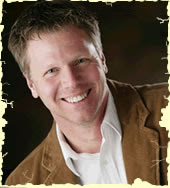


Mr. Wiemers
http://mrwiemersshop.com/

Monday, February 2, 2009

Mr. Wiemers' Shop New Blog

On the way to school I was thinking about my earliest recollections of the educational system. These thoughts were the result of having spent the weekend at my Dad's place talking "shop". Since he began teaching in a shop in 1956 and became a school administrator in 1963 talking "shop" means talking about woodworking and educational issues. One of my first memories of education was the new American flag on my Dad's desk. Alaska had just become a state in 1959 and in the early 1960's I would play with this new flag that had all fifty stars on it. It was in this same office my Dad's desk held all the technology available for him in that day, a black rotary phone. I have a photo of my Dad sitting behind his desk with nothing but a black rotary phone. We were talking about that phone this weekend. I remember the phone number for the school was #52 or something. Our home number was also a simple two digits.